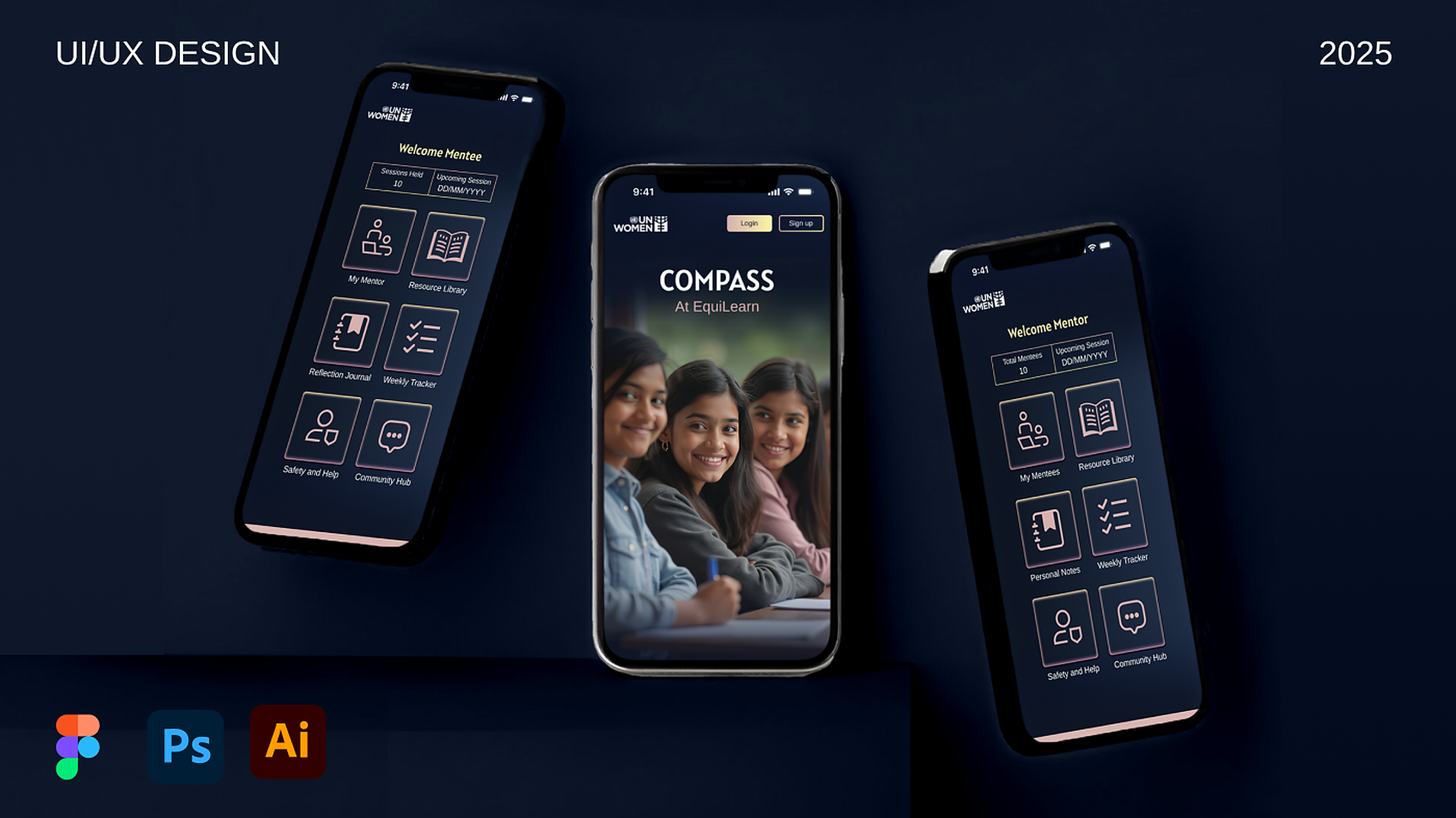
The Real Problem
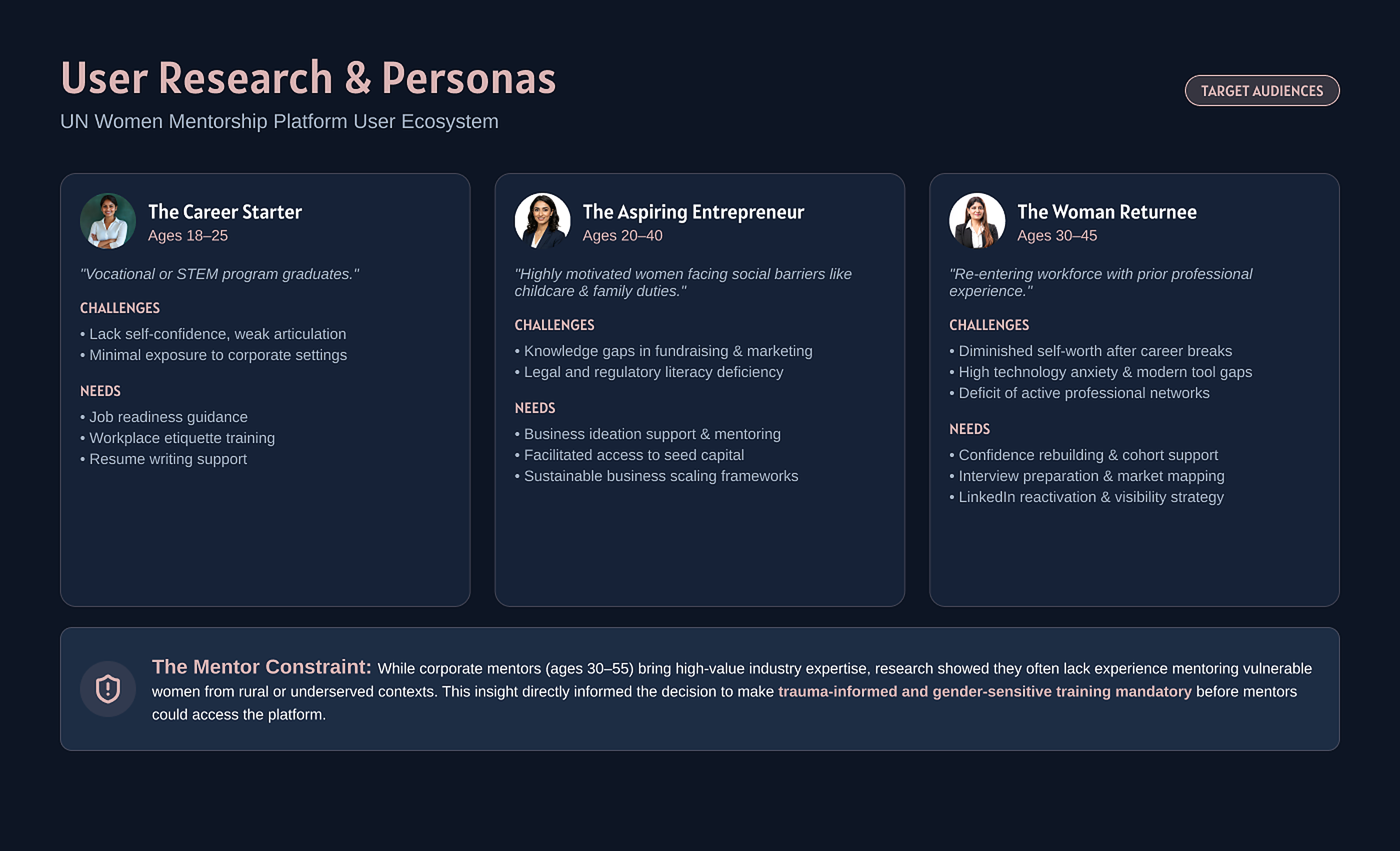
Young women transitioning from vocational training to employment or entrepreneurship face intense systemic barriers. To succeed, they need more than just technical skills; they often struggle with a lack of exposure, confidence, and access to industry networks. The target users required a platform that addressed:
- Safe, trauma-informed digital spaces for career development.
- Direct exposure to modern industry networks and role models.
- The confidence and articulation required for workplace readiness.
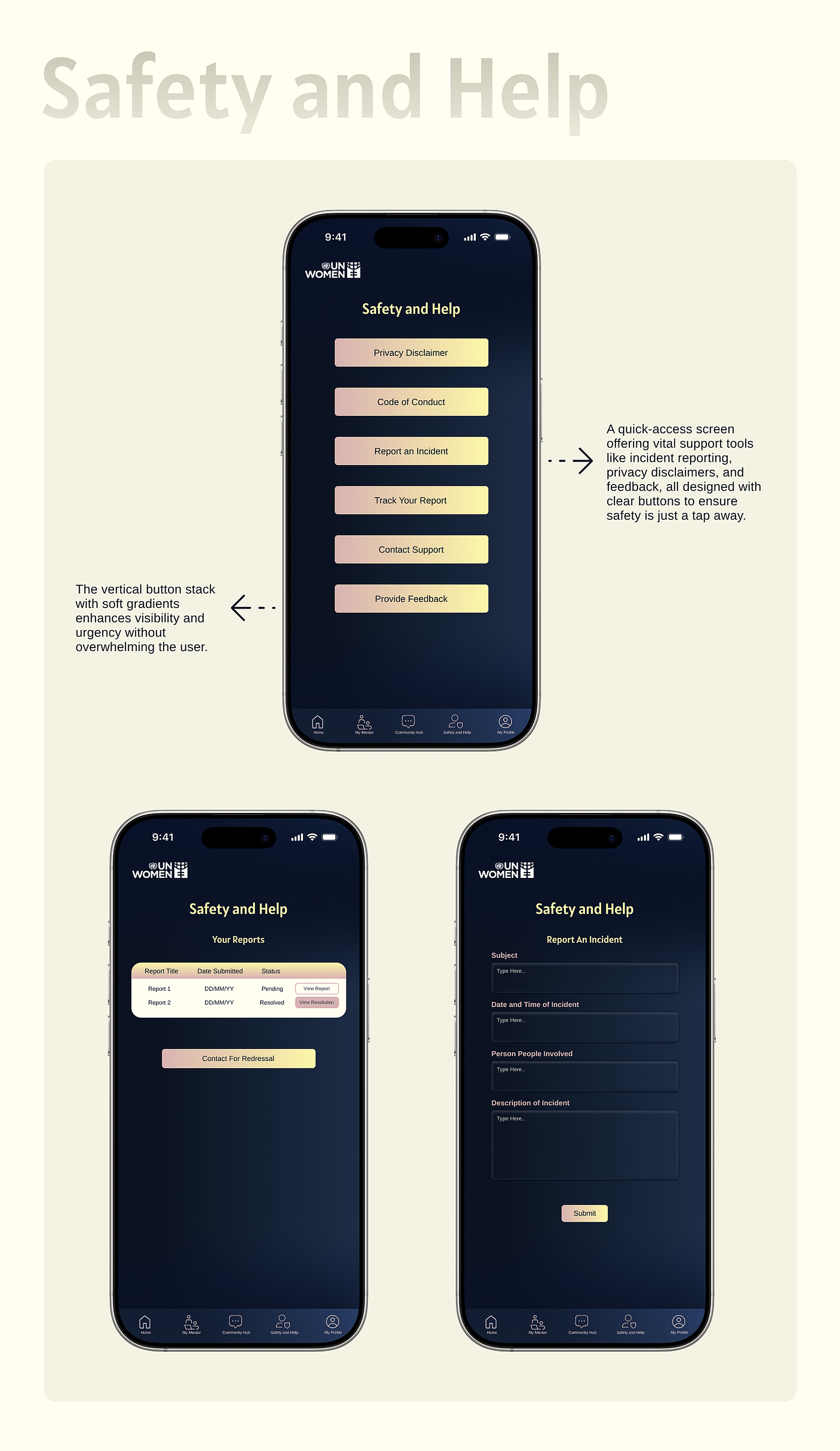
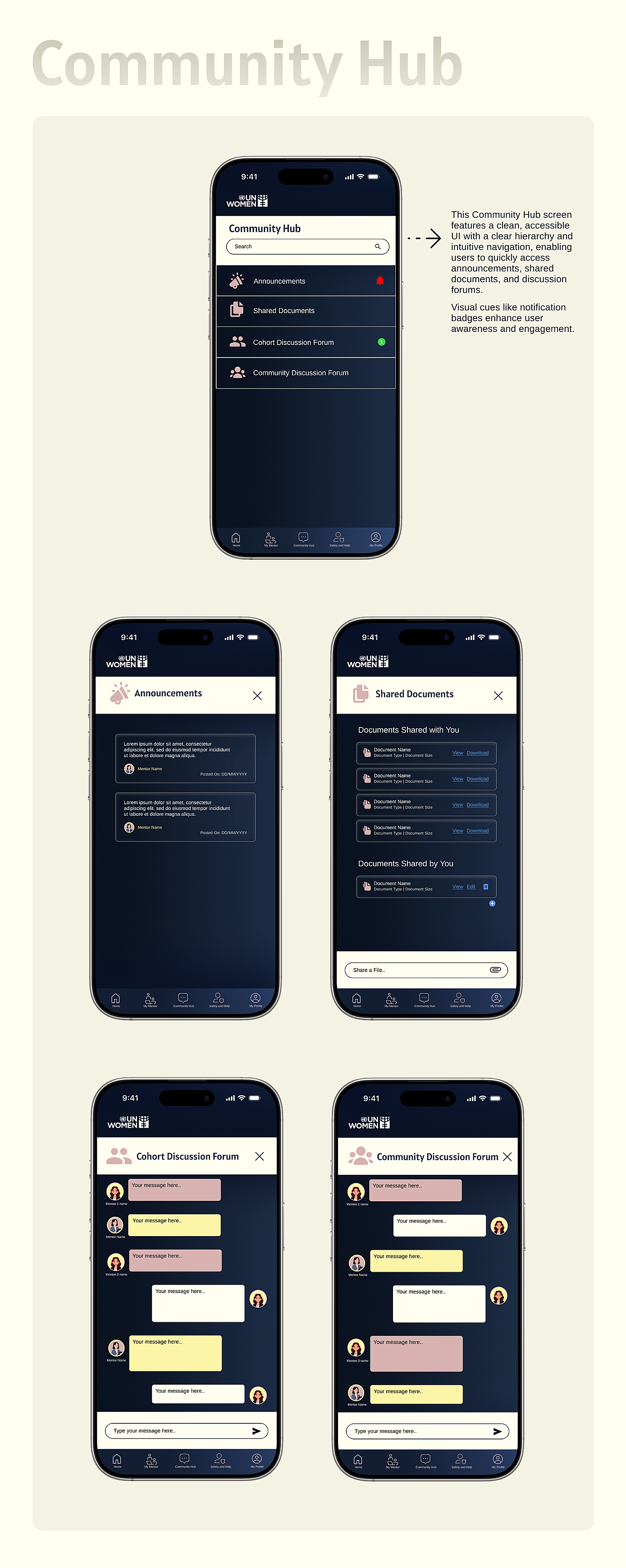
The goal was to design an accessible, low-bandwidth dashboard that facilitates these critical mentorship connections while strictly enforcing psychological safety and reducing technical anxiety for vulnerable users.

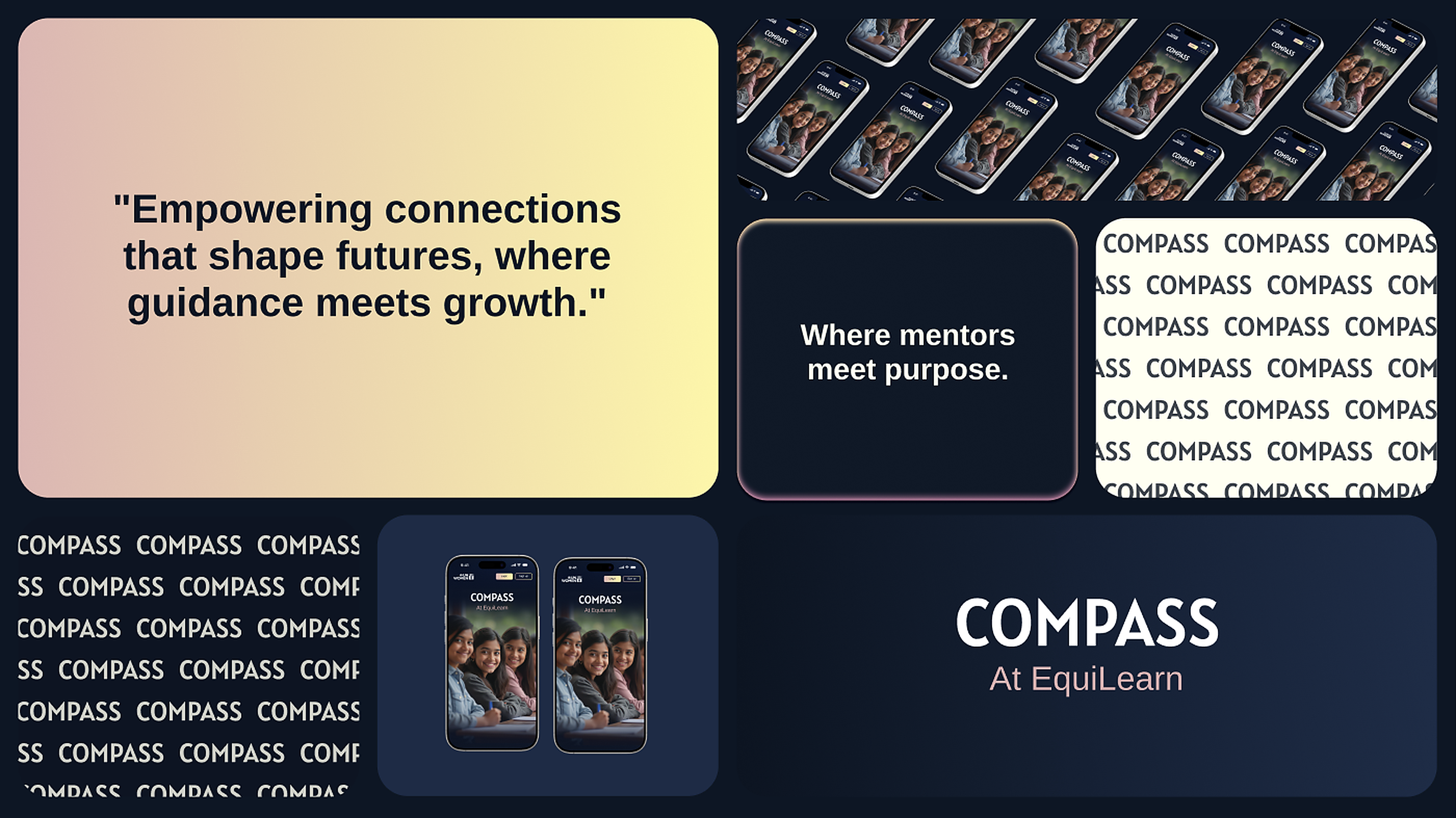
Navigating the Constraints
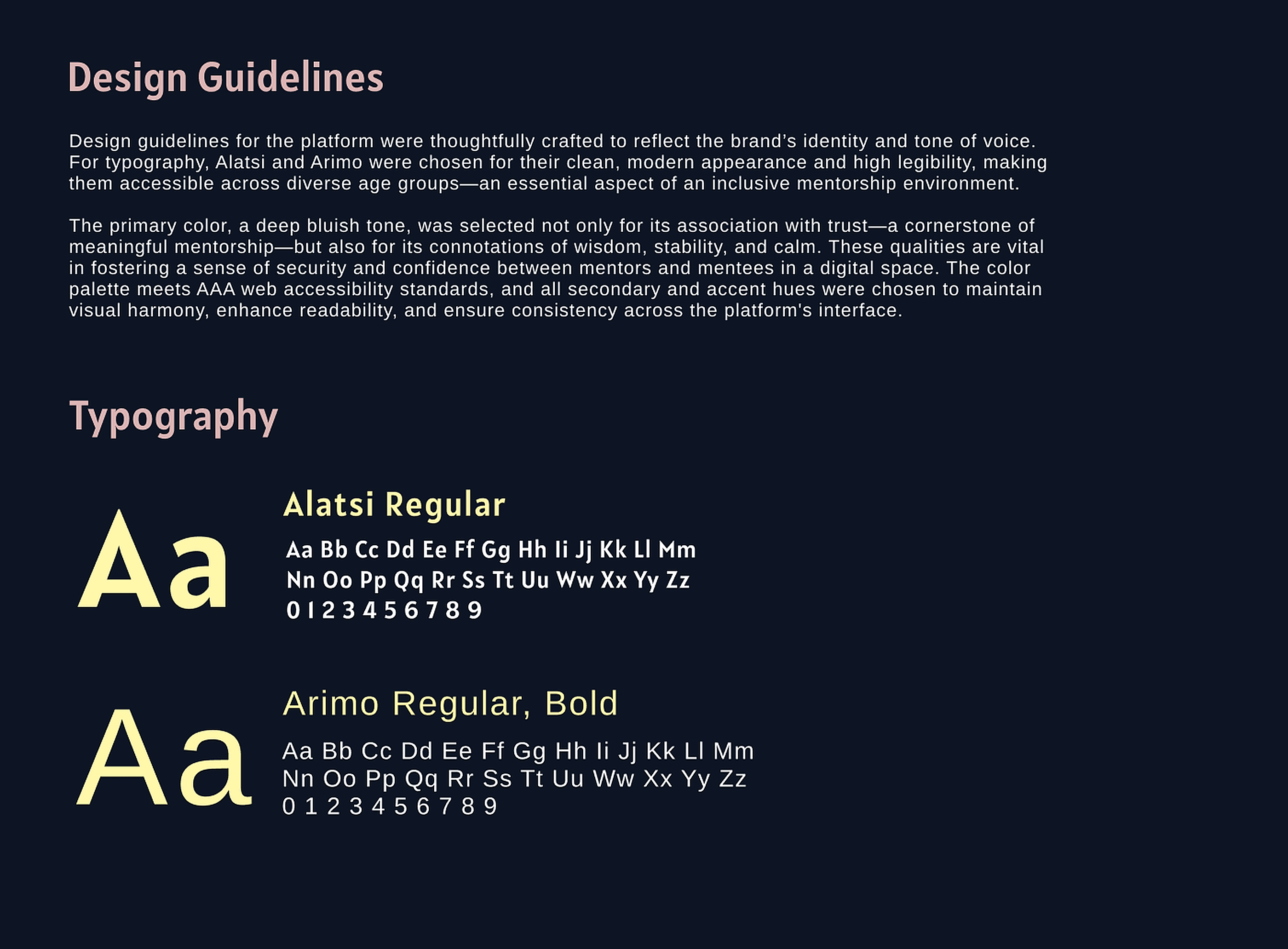
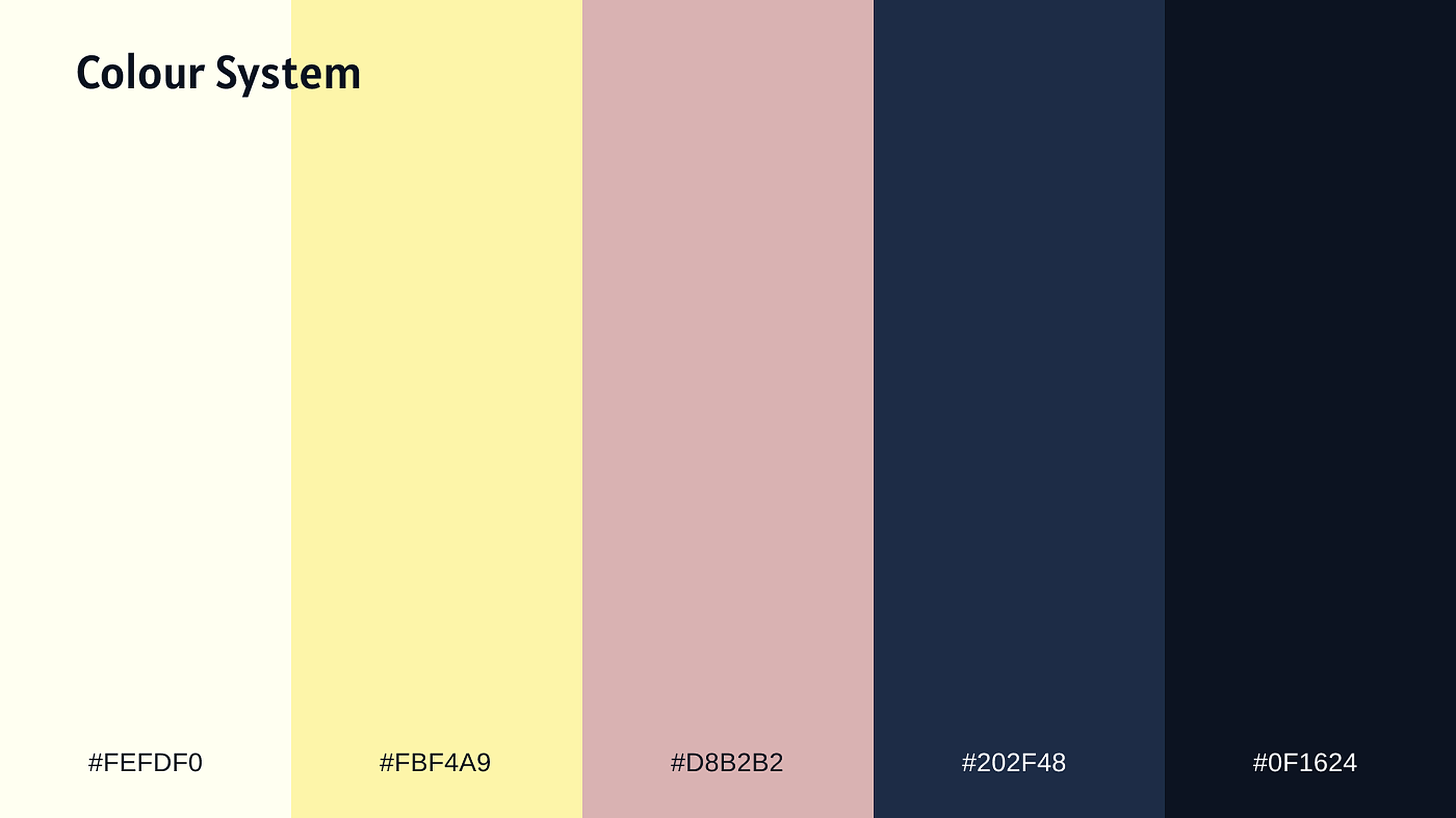
Accessibility first: I began by prioritizing low-bandwidth performance and high-contrast typography to serve users in rural environments.
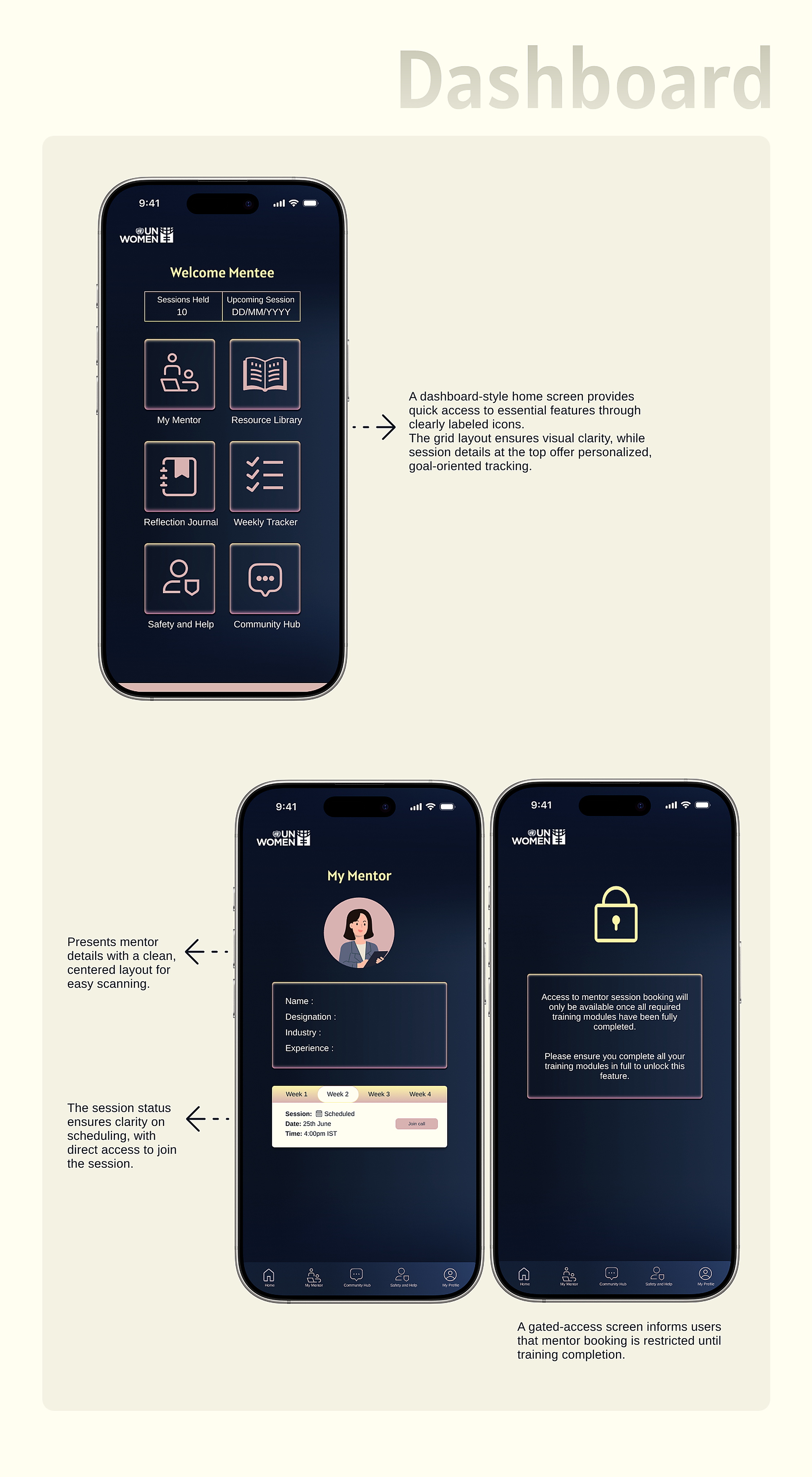
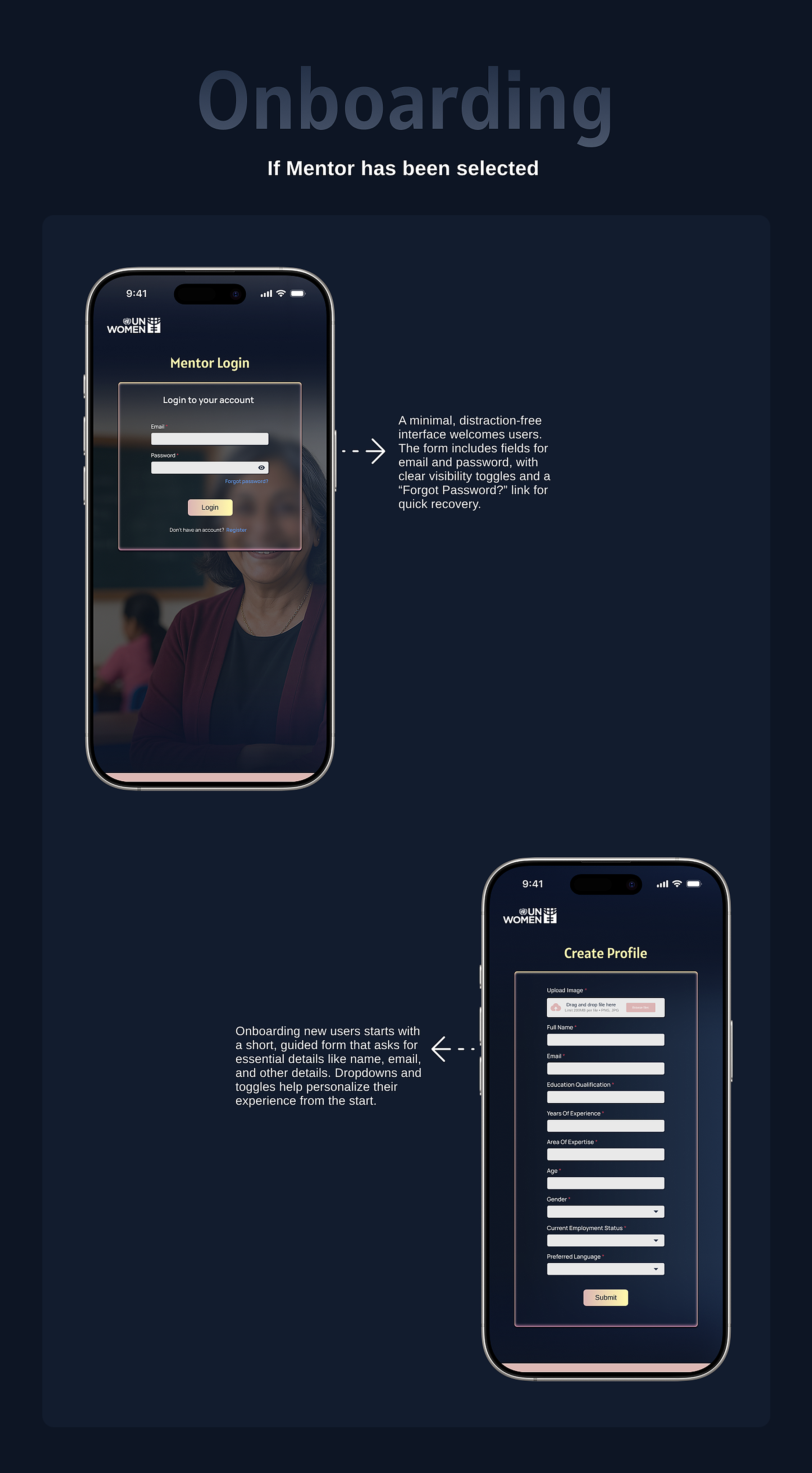
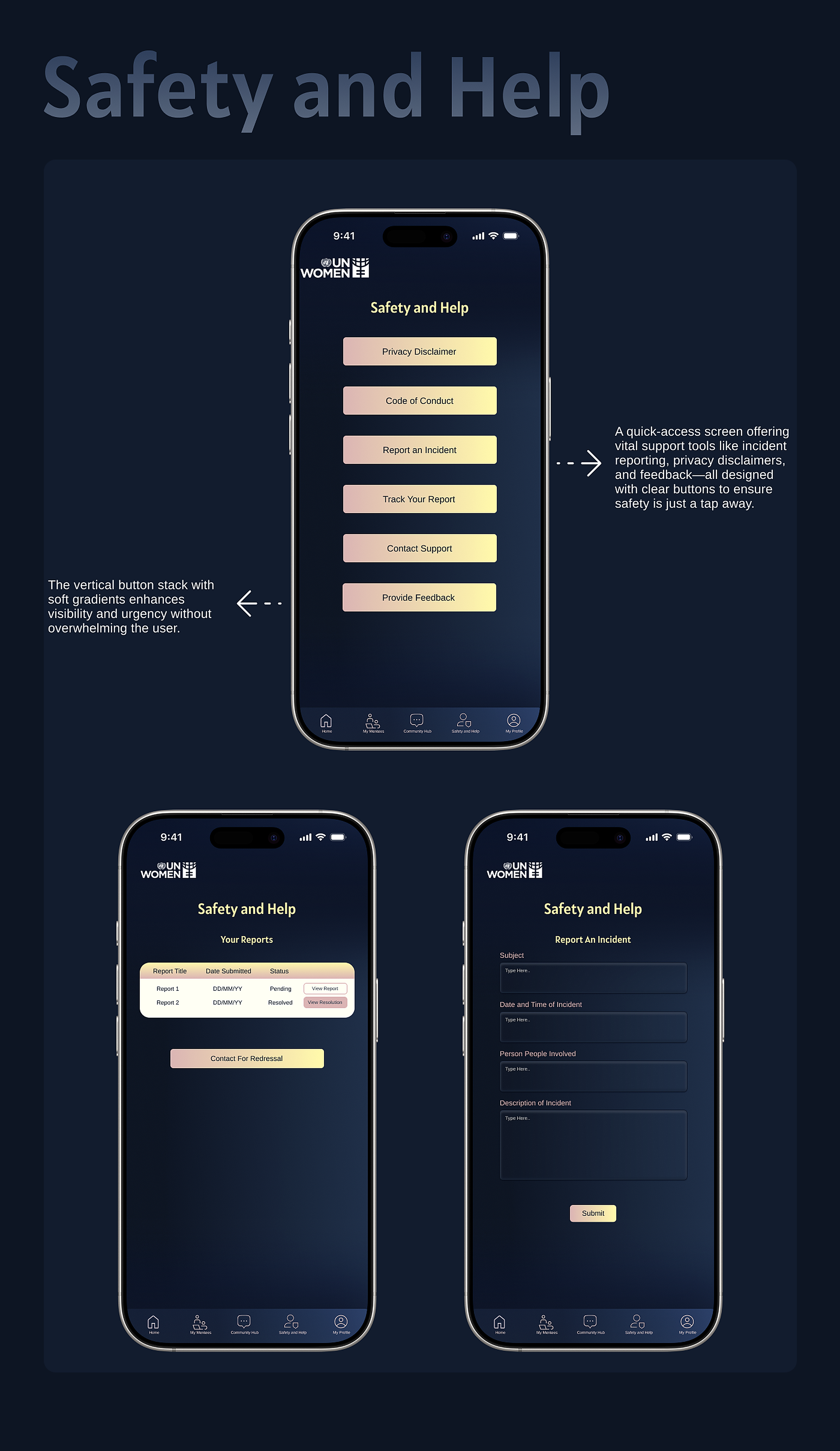
Friction for safety: I intentionally locked mentor access behind mandatory training to ensure a secure, trauma-informed digital space.
Guided structure: Strict four-week timelines and locked modules prevented cognitive overload for users experiencing tech anxiety.
Working within strict guidelines, I balanced UN Women data safeguarding standards with an approachable, mobile-first user experience. The strategic decisions included:
- Optimizing low-bandwidth performance
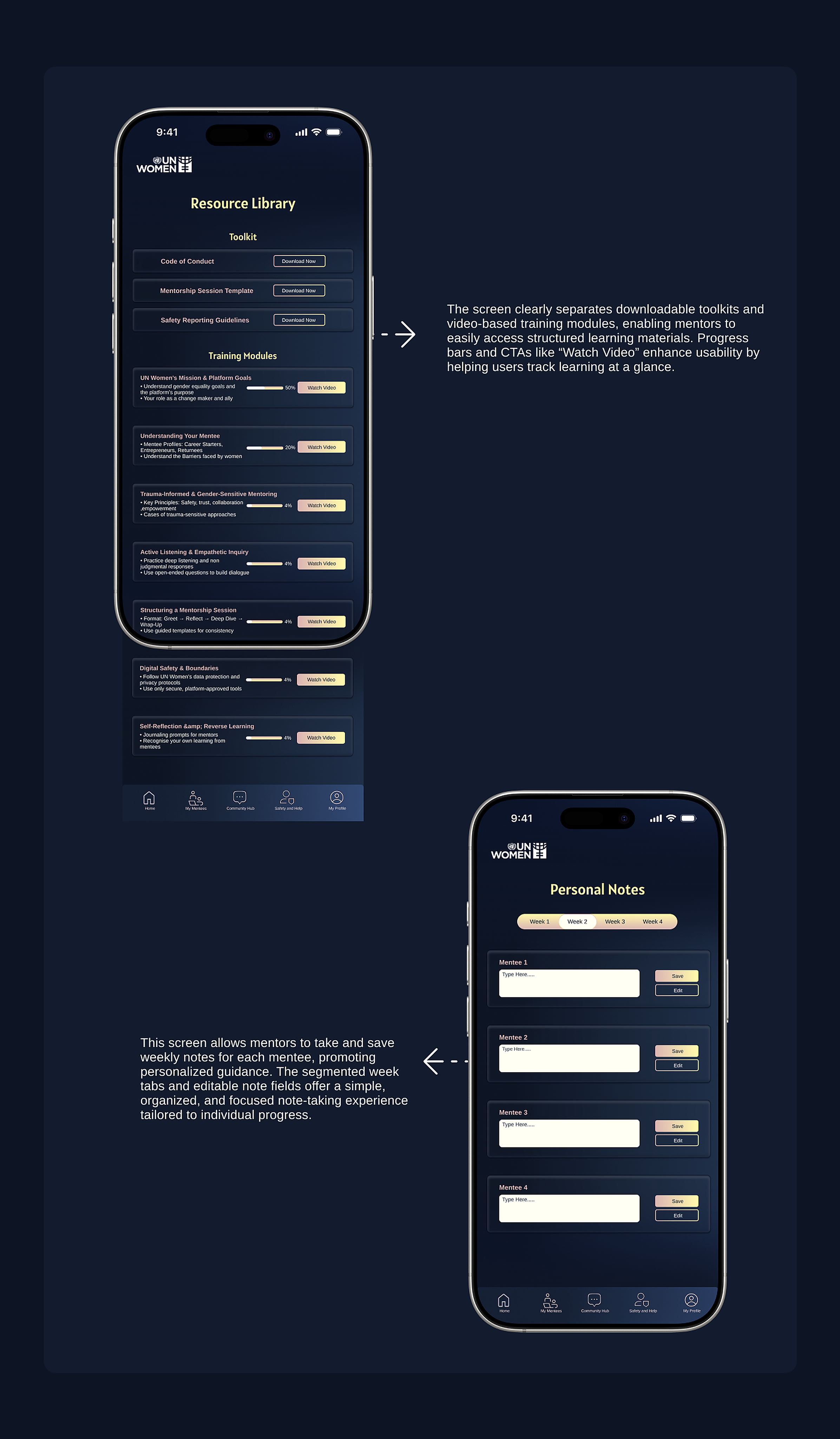
- Mandating trauma-informed training
- Elevating incident reporting
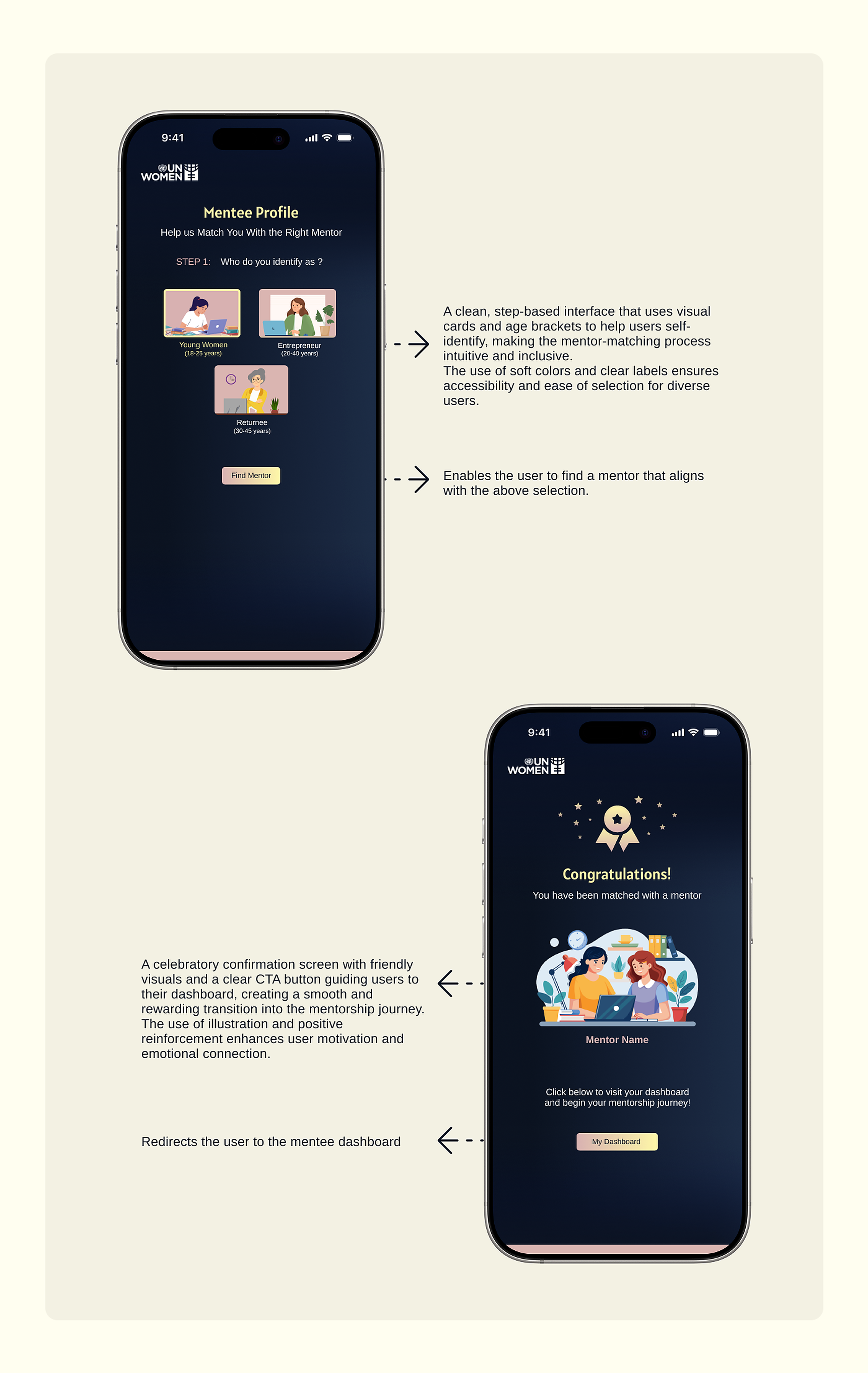
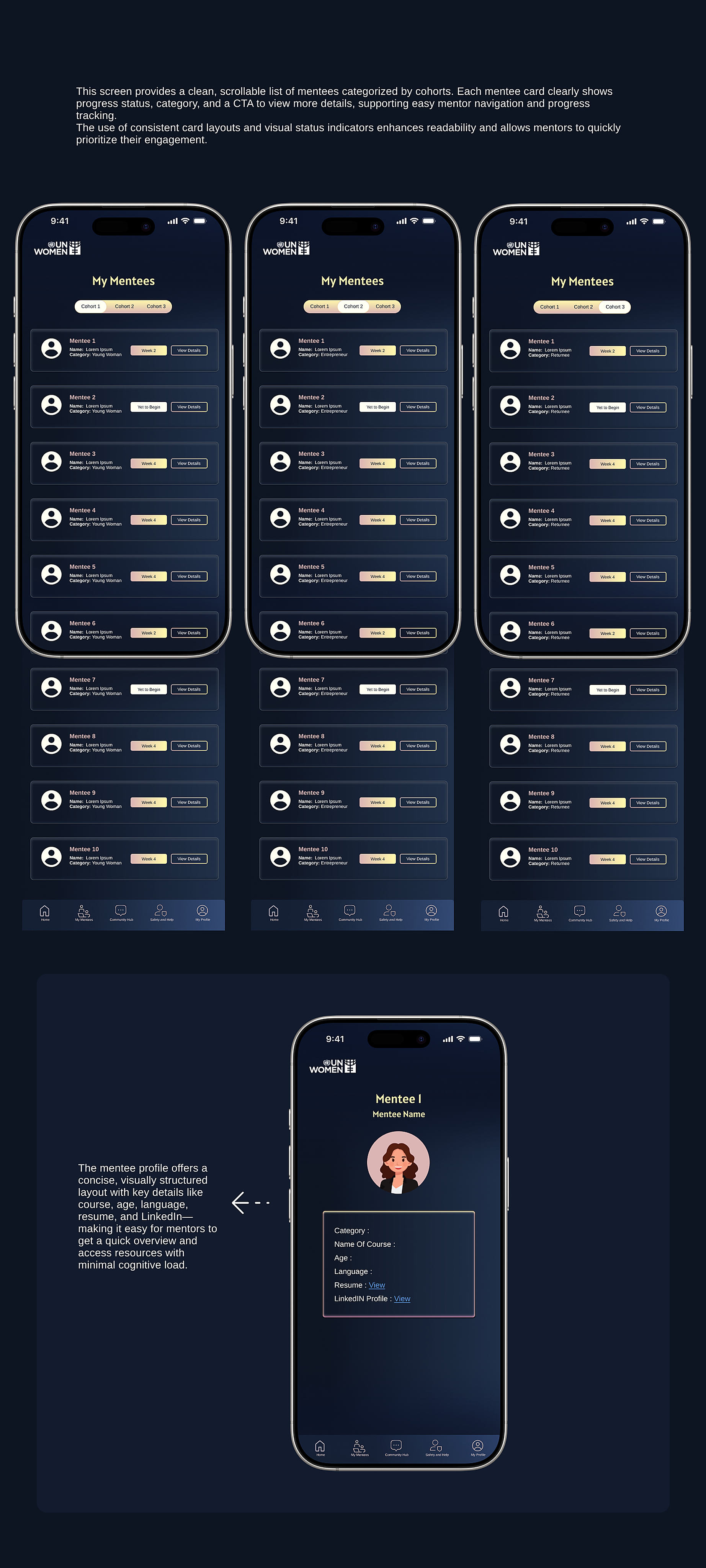
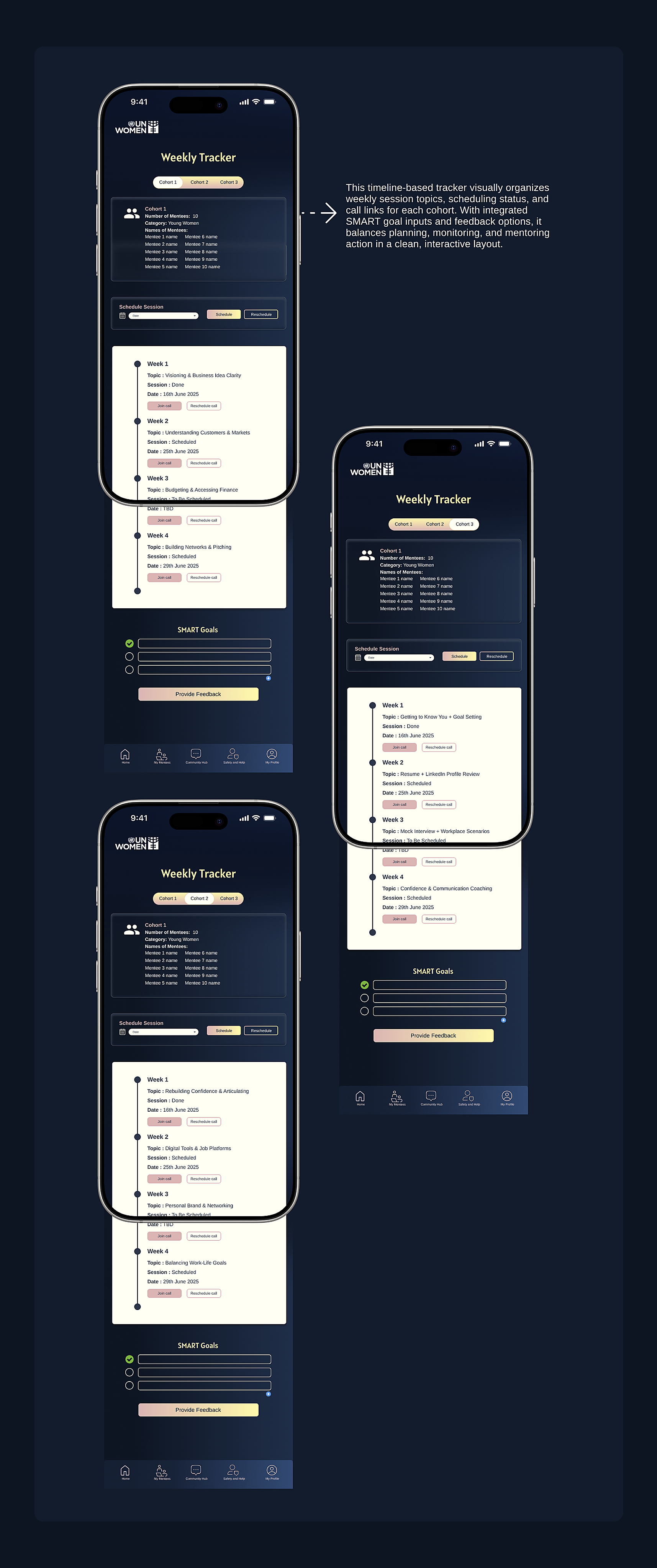
- Structuring four-week timelines
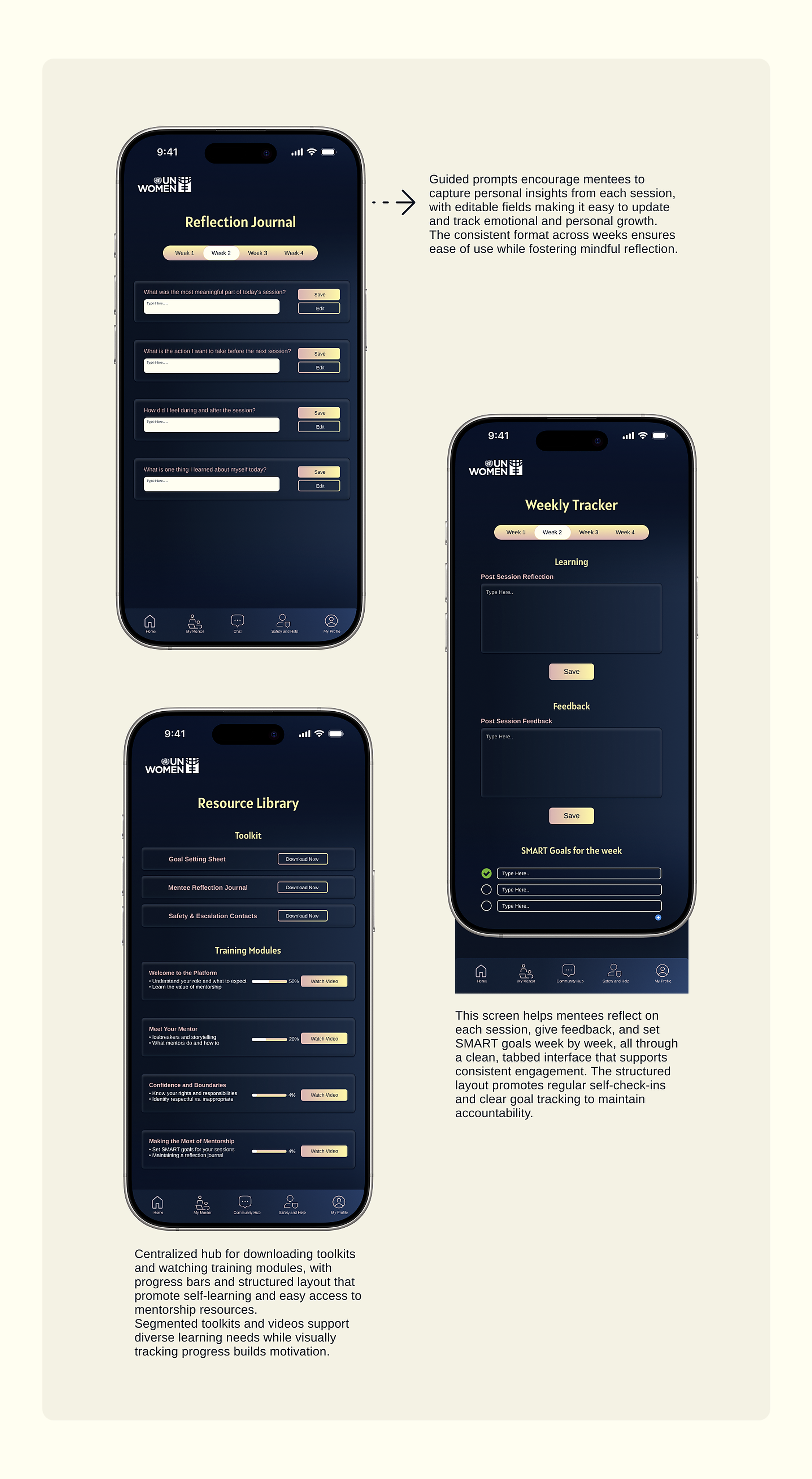
- Enforcing SMART goal tracking
- Creating segmented mentorship modules
Each constraint guided the design, ensuring the platform remained highly secure without sacrificing usability.
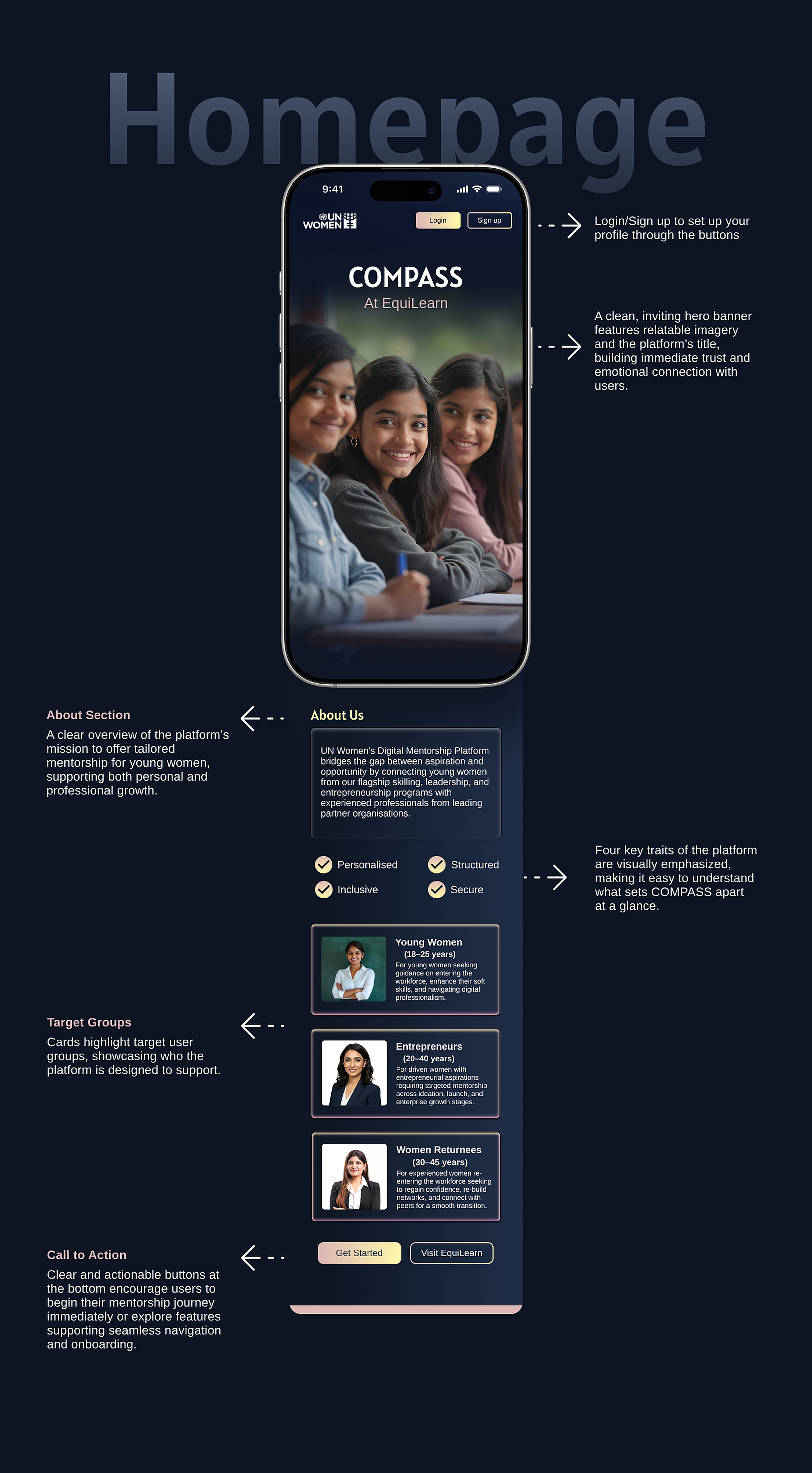
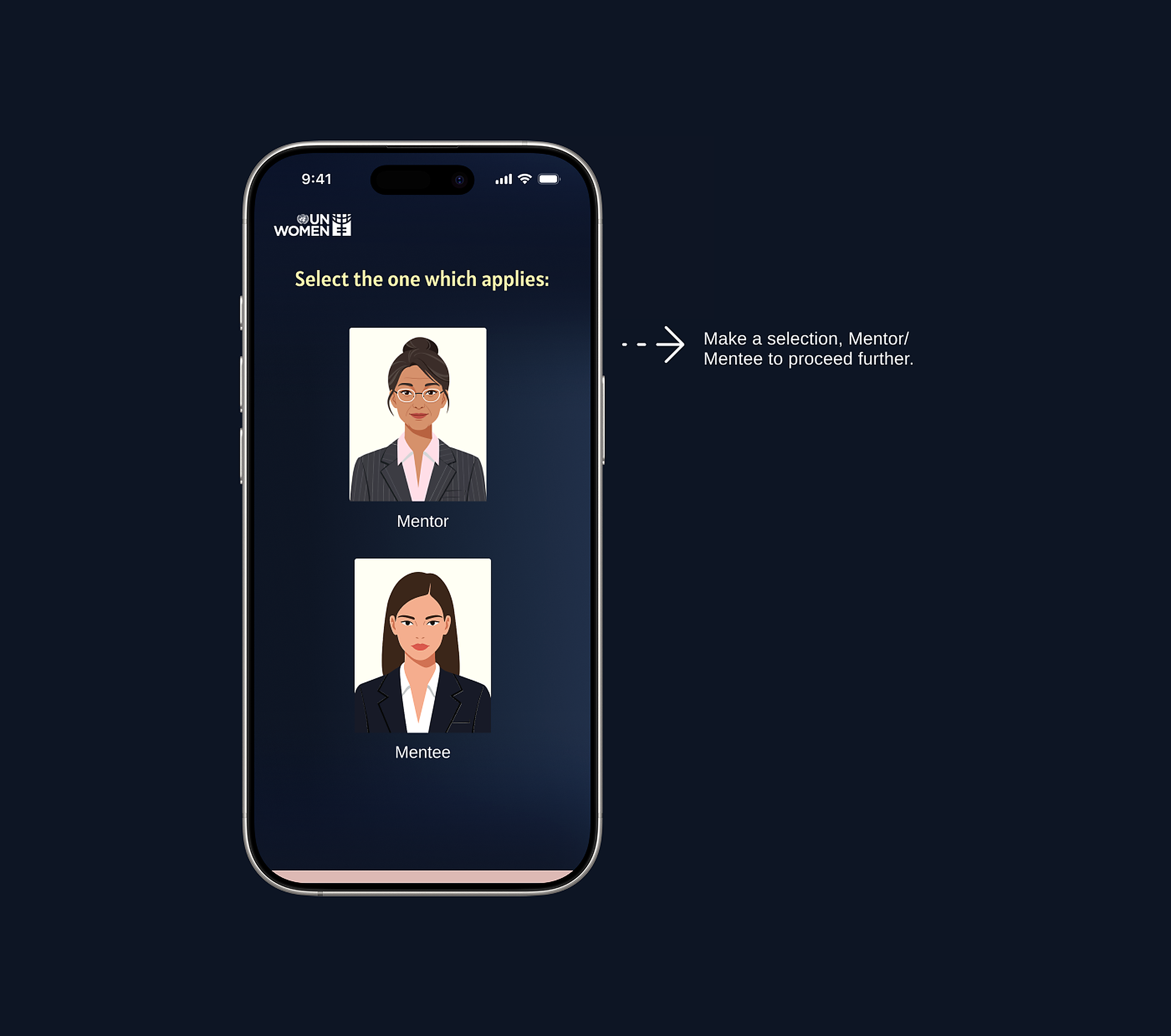
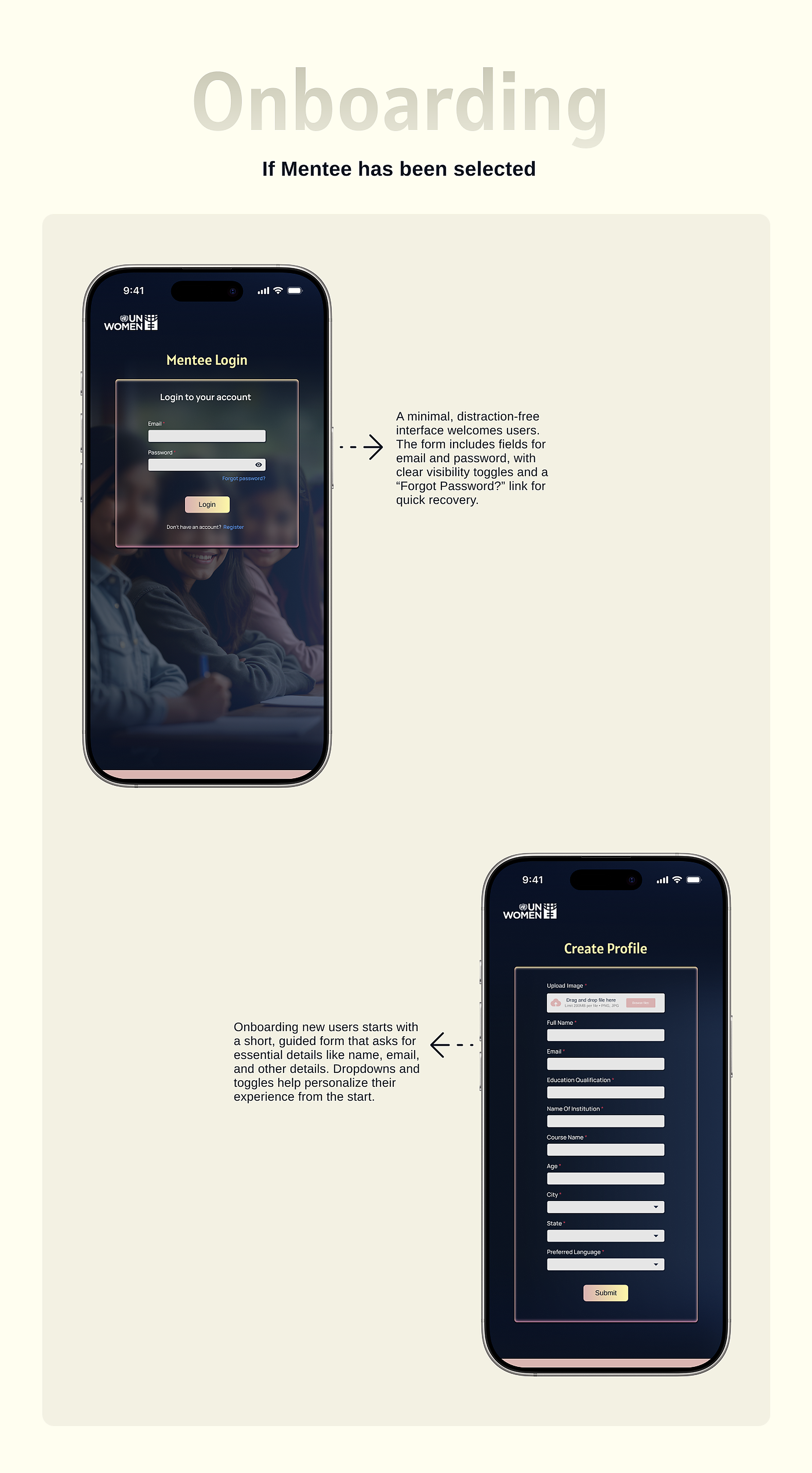
The Impact & Outcome
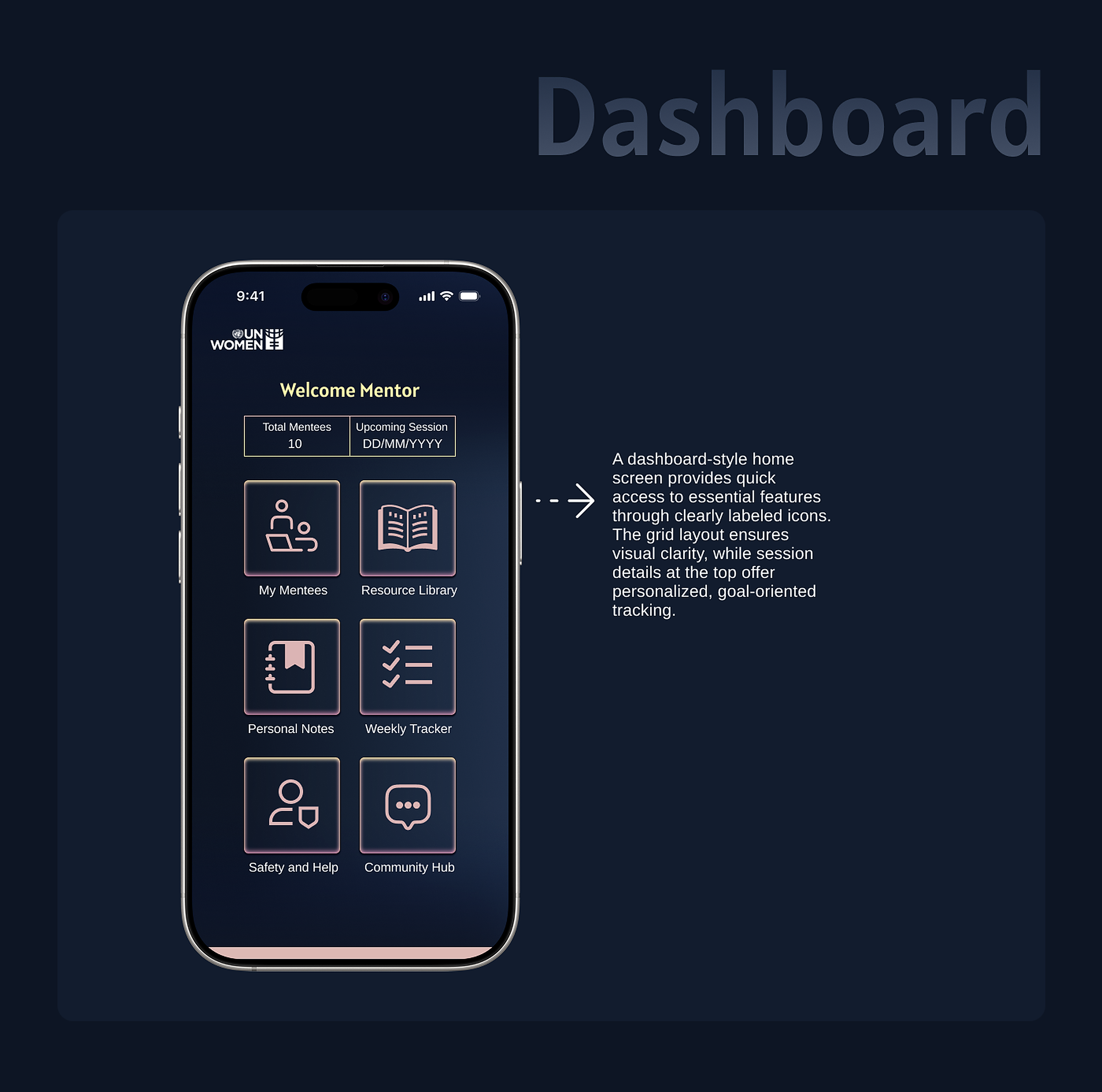
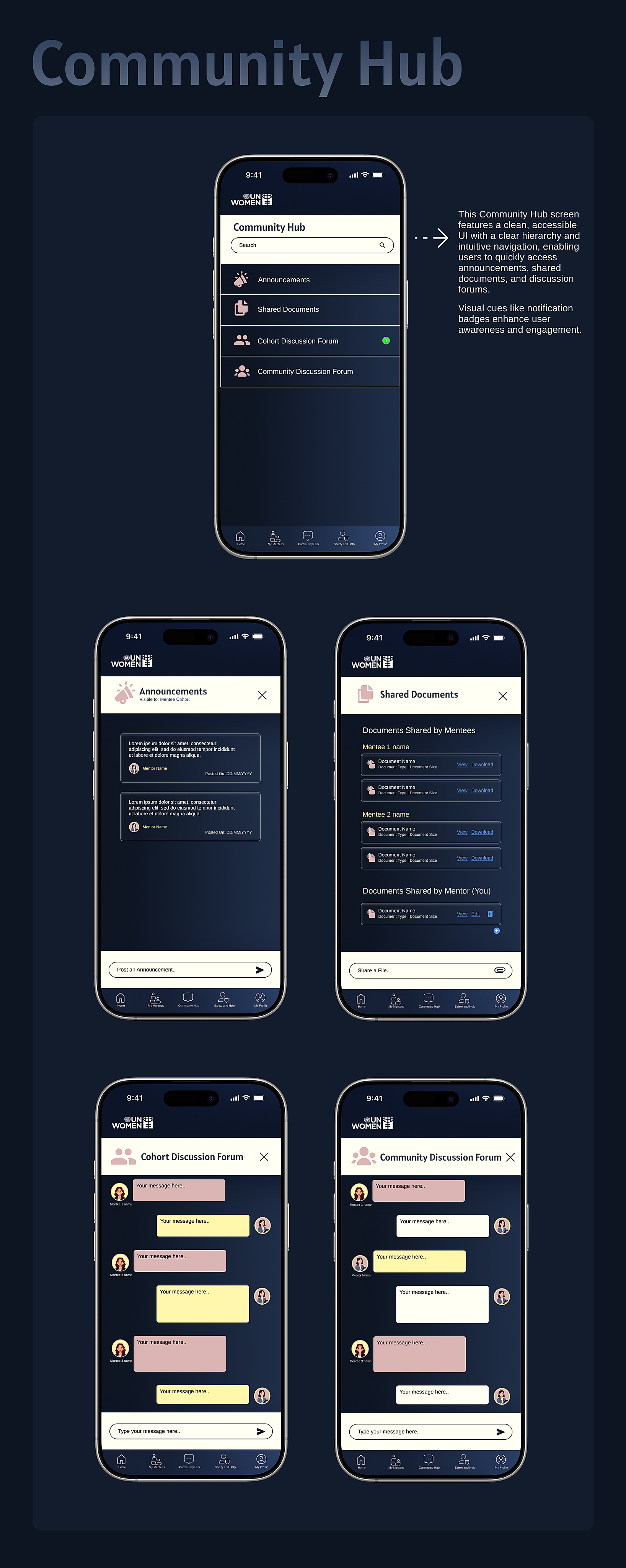
From pilot to production: I finalized the complete mobile-first UI architecture and managed a comprehensive developer handoff, enabling the platform's initial July 2025 soft launch on EquiLearn and its subsequent rollout into full production.
Measurable scale: I delivered a robust digital ecosystem built for real-world deployment, actively scaling the platform to support 5,000+ mentees and 100+ corporate mentors across 10+ states.
Key Takeaways
Translating Policy to Architecture: Learned how to turn abstract institutional safeguarding policies into concrete UX workflows, letting user vulnerabilities dictate the trade-offs.
Balancing Authority with Approachability: Discovered how to bridge the institutional trust of UN Women with a digital space that feels warm, accessible, and trauma informed.
Enforcing Global Compliance: Successfully integrated 5 core UN mandates directly into the product architecture.
Prioritizing Psychological Safety: Proved that in social-impact design, psychological safety is the most critical feature one can build.