Defining the Framework
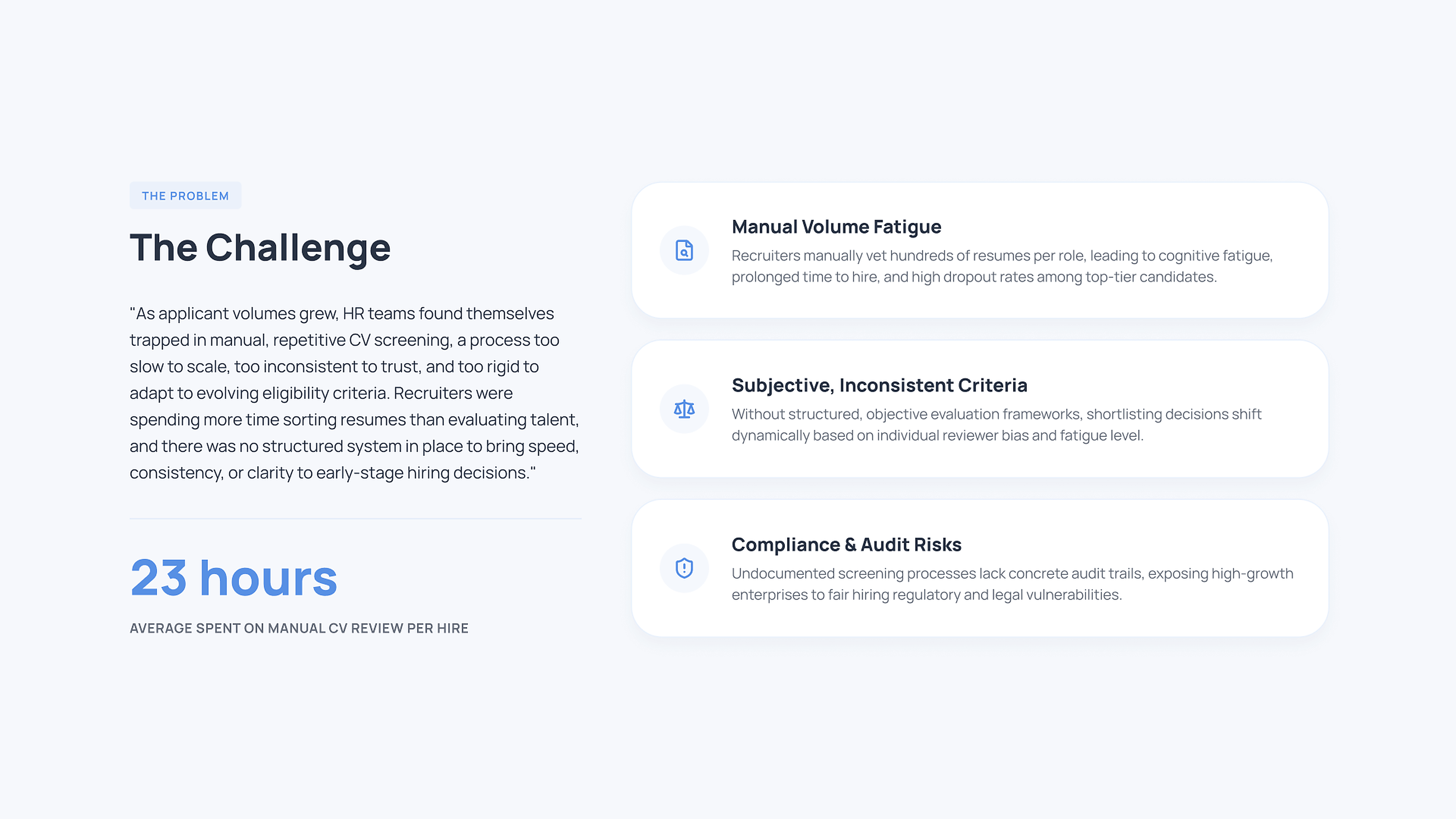
Understanding needs: I began by analyzing core institutional requirements and pinpointing manual bottlenecks in the current recruitment cycle.
Identifying gaps: I examined existing tracking systems to locate friction points, specifically rigid filtering and a lack of custom weightage.
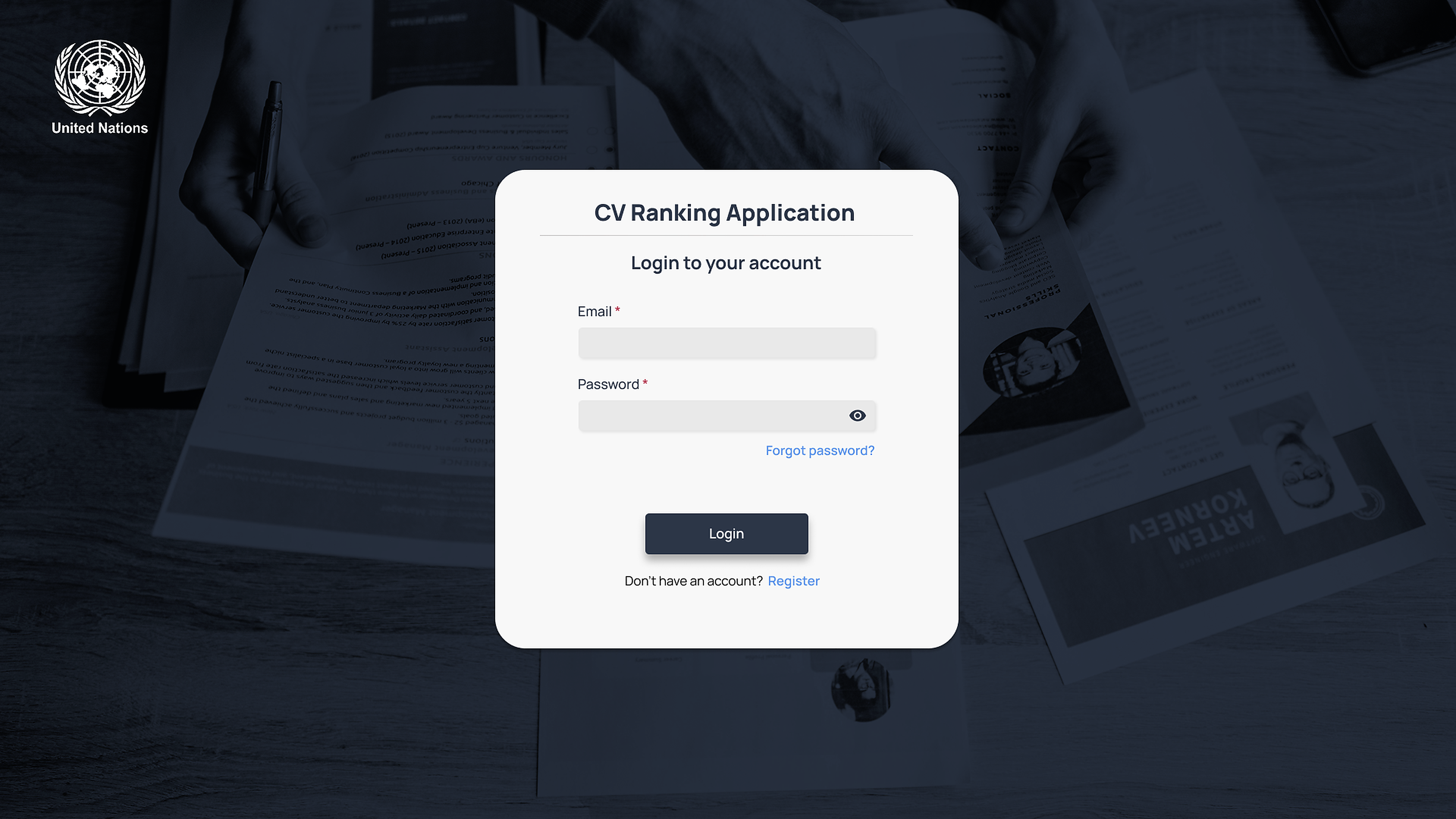
Defining users: I focused the experience on two key personas: recruiters needing processing speed, and administrators requiring strict compliance oversight.
I executed the complete product research and design process, from identifying operational friction points to building a working component system. The design process included:
- Understanding project requirements and identifying current workflow bottlenecks.
- Mapping out user journeys and structuring the platform's information architecture.
- Designing clear navigation and layouts to simplify dense data tables.
- Building a reusable UI component library to ensure visual consistency.
- Prototyping the AI filtering interactions and refining the final experience.
Each step fed the next, ensuring the interface solved actual operational bottlenecks before the design drifted.
How It All Came Together
To handle enterprise scale hiring, the system is separated into distinct modules designed for different phases of the evaluation pipeline, ensuring both speed and accuracy.
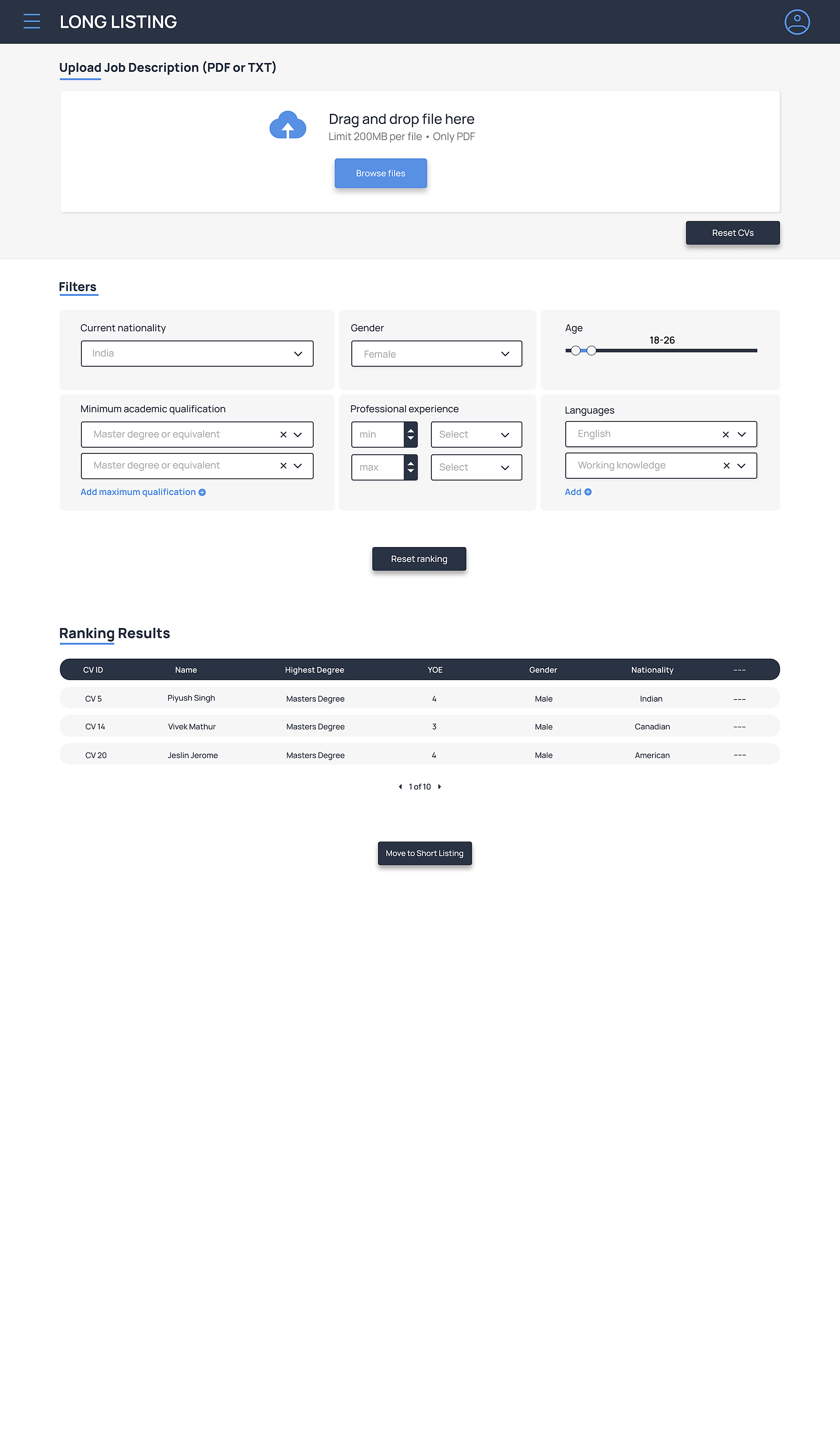
Macro Longlisting: Handles high-volume initial filtering using demographic, academic, and professional parameters. Recruiters view ranked outputs and bulk approve qualified candidates for the next round.
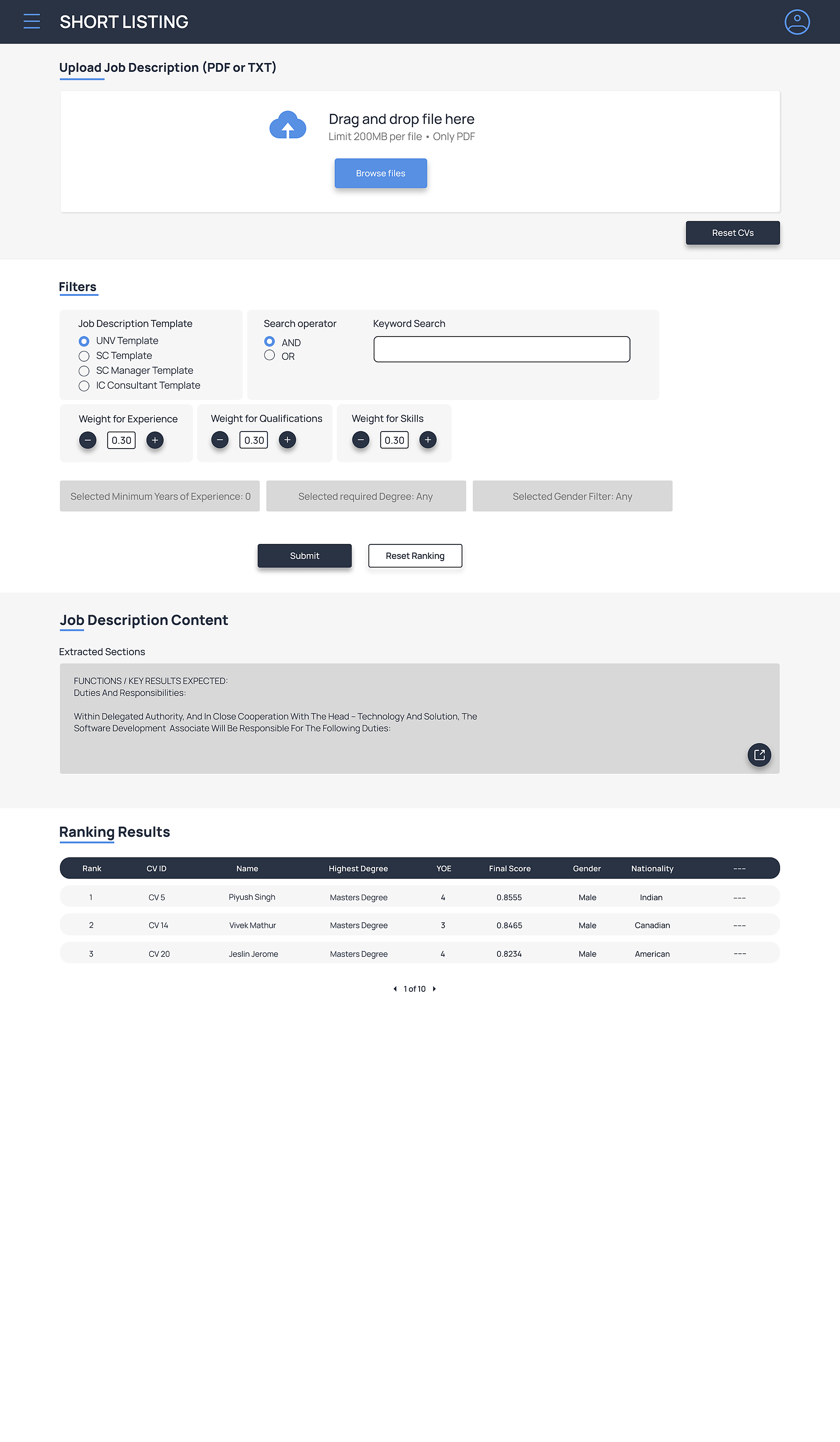
Granular Shortlisting: Drives role-specific AI evaluation. Recruiters upload Job Descriptions, and the system automatically extracts key responsibilities. Custom weightage sliders allow users to dynamically prioritize experience, qualifications, or skills for the algorithm to score.
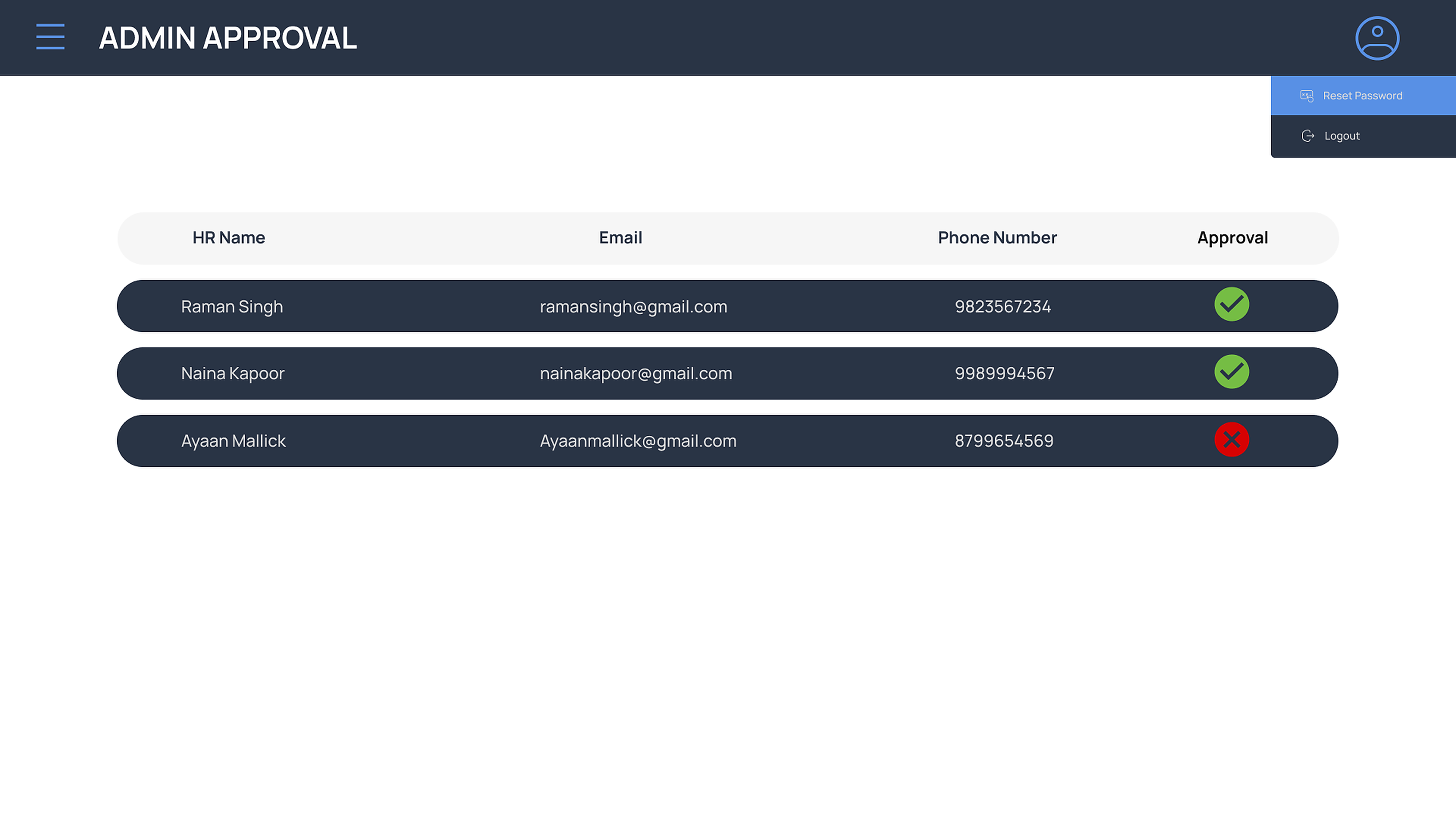
Administrative Governance: A dedicated oversight layer displaying HR activity logs and final approval statuses (green checkmarks/red crosses) to ensure AI-assisted hiring decisions remain transparent, auditable, and compliant.
Designing for Trust
In a hiring tool, a ranking only helps if recruiters can understand it, question it, and defend it. I designed trust into the product at three levels.
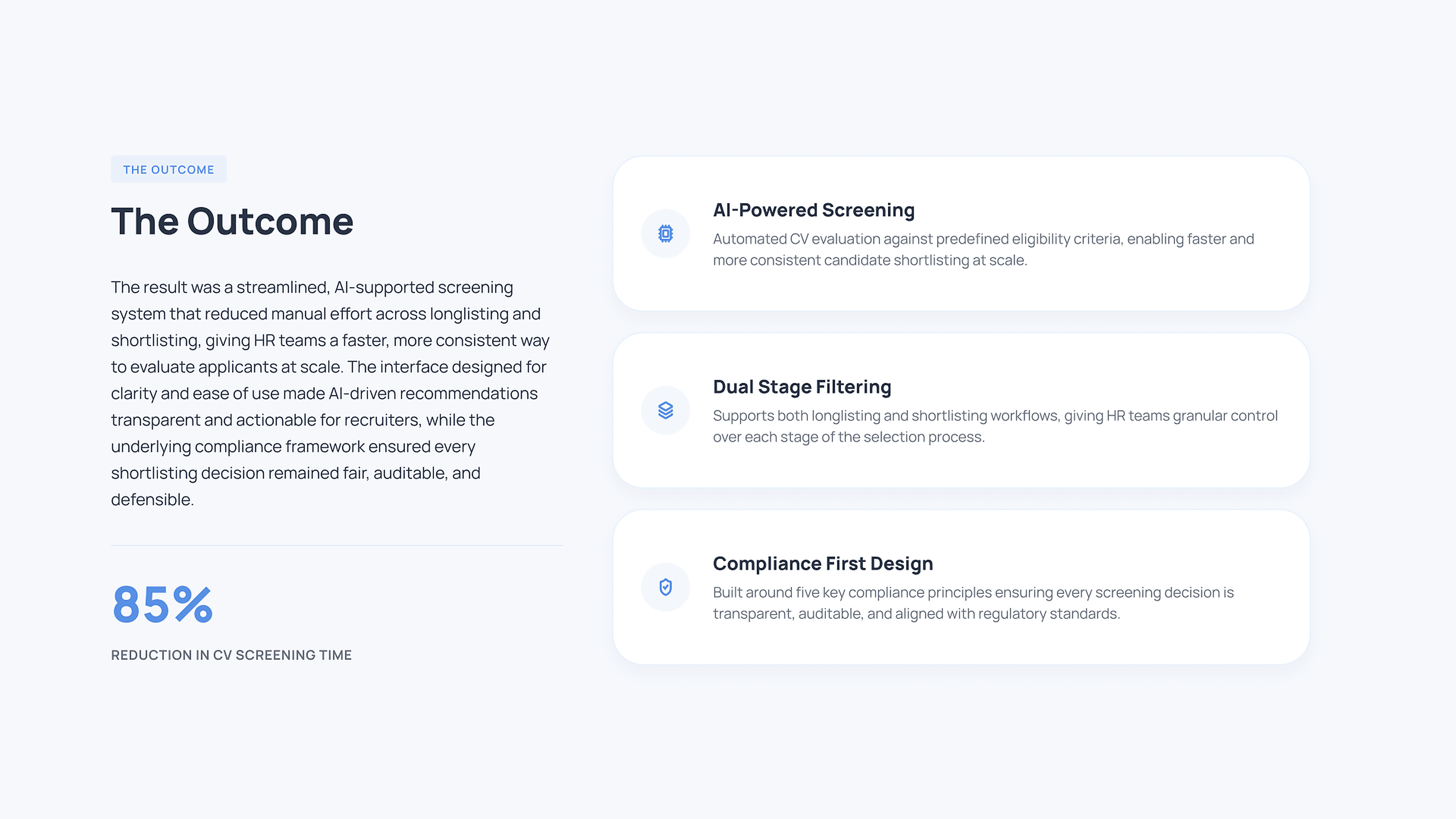
Transparent ranking logic: Scores are driven by criteria recruiters define themselves. Custom weightage sliders and automatically extracted job responsibilities show what the algorithm prioritizes, so no candidate is ranked by an unexplained number.
Recruiter control: The AI ranks, but recruiters decide. Candidates move forward only through recruiter approval, and weightage can be adjusted to re-score results whenever an output looks wrong.
Bias and compliance oversight: Five compliance principles shaped the workflow, anchoring screening to job-relevant eligibility criteria rather than subjective signals. A dedicated governance layer with HR activity logs and final approval statuses keeps every decision auditable.
Key Learnings
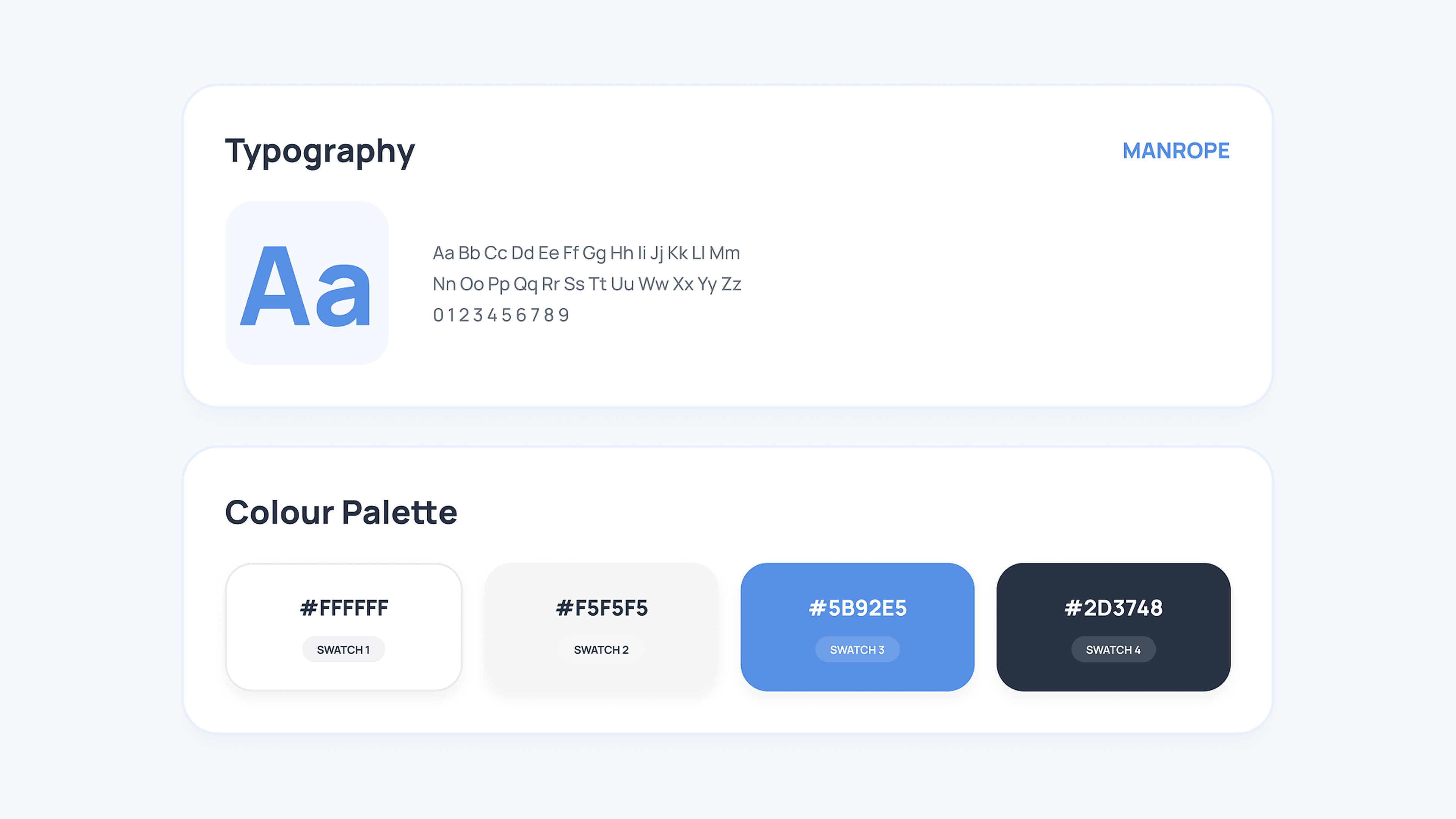
Designing for data density: Balancing complex data grids and multi-parameter filters without overwhelming the user required a strict typographic hierarchy (using Manrope) and a restrained, institutional color palette.
Designing for AI transparency: Integrating intelligent automation into high-stakes environments reinforced that user trust and clear system feedback are just as critical as algorithmic speed.